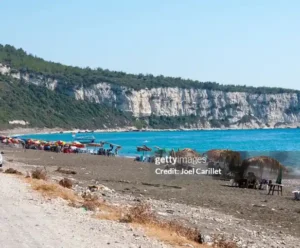
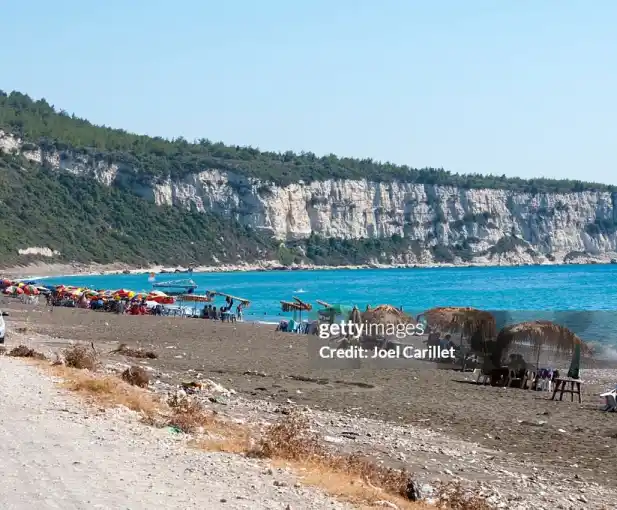
Nestled along the rugged coastline of northwestern Syria, where the turquoise waters of the Mediterranean Sea meet the verdant slopes of the Coastal Mountain Range, lies Wadi Qandil. Located approximately 25 kilometers north of the port city of Latakia, this coastal sanctuary has long been regarded as one of the most beautiful and serene destinations in the Levant. Unlike the bustling urban beaches of the city, Wadi Qandil offers a raw, cinematic landscape that blends volcanic sands with dense pine forests.
The Geography of a Hidden Paradise
The name “Wadi Qandil” translates roughly to “Valley of the Lamp,” a title that hints at the area’s historical role as a landmark for sailors. The geography of the region is unique; it is a point where the mountains seemingly collapse into the sea. The beach is famous for its dark, volcanic sand—a rarity in a region dominated by pebble beaches—which gives the water a deep, crystalline blue hue. The surrounding cliffs are draped in Mediterranean pine and oak trees, providing a natural aromatic backdrop of sea salt and evergreen resin.
The valley itself is carved by a seasonal stream that winds through the mountains before reaching the sea. This intersection of fresh and saltwater creates a microclimate that remains slightly cooler than the humid city center of Latakia, making it a preferred summer escape for locals and tourists alike.
The Experience: Sun, Sand, and Simplicity
What sets Wadi Qandil apart from other Mediterranean resorts is its commitment to simplicity. While there are modern amenities, the area has largely resisted the encroachment of massive high-rise hotels. Instead, the “Wadi” experience is defined by:
- Beachfront Bungalows: Small wooden cabins and eco-friendly resorts line the shore, allowing visitors to wake up to the sound of crashing waves.
- Local Gastronomy: The area is dotted with family-run restaurants serving fresh Mediterranean catch. From grilled sea bass to traditional Syrian Mezza, the food is as authentic as the scenery.
- Sunsets: Because the beach faces west, it offers some of the most spectacular sunsets in Syria, with the sun sinking directly into the Mediterranean horizon.
A Hub for Adventure and Relaxation
For those who prefer more than just lounging under a straw umbrella, Wadi Qandil is an outdoor playground. The clear waters are ideal for snorkeling and swimming, with underwater rock formations teeming with marine life. The surrounding hills offer numerous hiking trails that provide panoramic views of the coastline, stretching all the way toward the Turkish border on clear days.
In recent years, the area has also become a center for youth culture and artistic retreats. It is common to find musicians, painters, and campers gathered around bonfires at night, contributing to a bohemian atmosphere that is hard to find elsewhere in the country.
Cultural and Economic Importance
Wadi Qandil is more than just a pretty face; it is a vital part of the local economy and identity. For the residents of Latakia, the valley represents a place of resilience and continuity. Despite the challenges faced by the country over the past decade, Wadi Qandil has remained a symbol of Syria’s natural beauty and the enduring spirit of its people. The tourism industry here supports local farmers, fishermen, and craftsmen, ensuring that the benefits of the region’s beauty are shared by the community.
Conclusion
Wadi Qandil is a rare intersection of mountain and sea, tradition and modern leisure. It serves as a reminder that the Syrian coastline holds treasures that rival any globally famous resort. Whether you are seeking a quiet place to reflect by the waves or a rugged landscape to explore, Wadi Qandil remains the “Lamp” of Latakia, shining brightly for all who find their way to its shores.
Note: Visitors are encouraged to respect the local environment by minimizing plastic use and preserving the natural cleanliness of the volcanic sands.